How to Get Mending Enchantment in Minecraft BE
Mending is arguably the most valuable enchantment in the game. It repairs your gear automatically using the XP you collect, which means a fully enchanted netherite pickaxe, an elytra, or your best armor set can last indefinitely without ever needing an anvil or spare materials. The catch is that Mending is a treasure enchantment, so no amount of bookshelves at an enchanting table will ever offer it to you. Here's every way to get it on Bedrock, from most to least reliable.

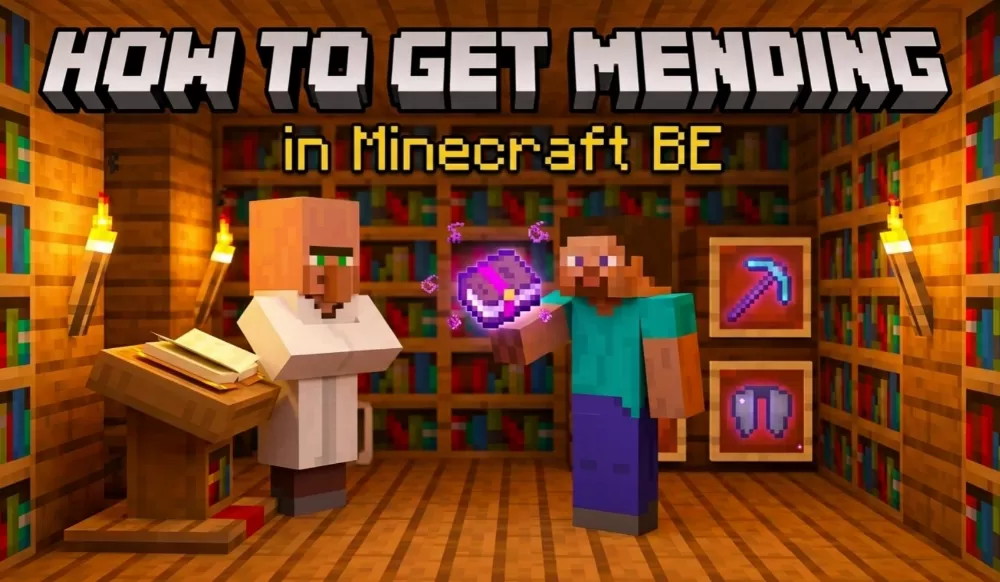
Librarian Trading (Best Method)
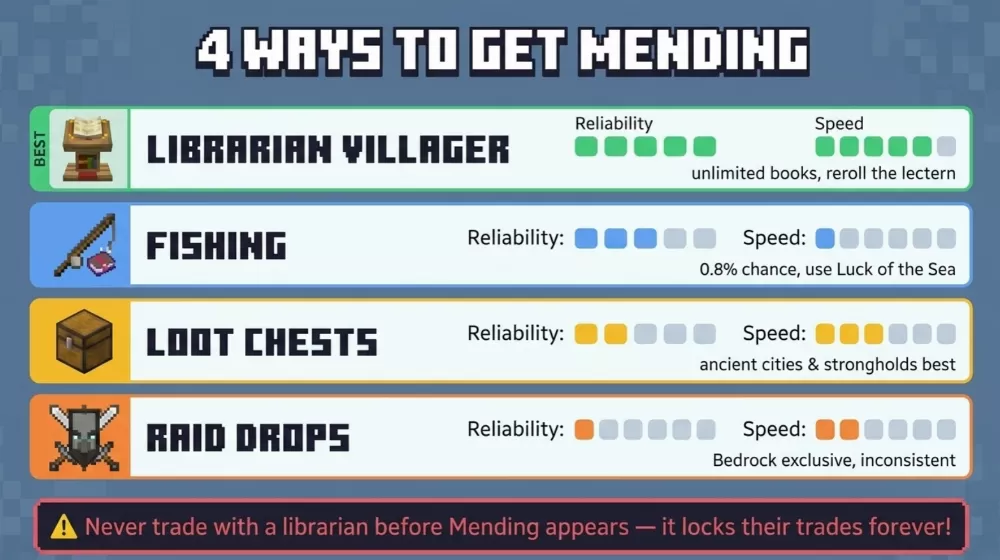
Trading with a librarian villager is by far the fastest and most reliable path to Mending, since a single villager can become an unlimited source of Mending books once set up correctly. Find an unemployed villager, or create one by clearing their current job, then place a lectern nearby. Once they claim it, they become a librarian. Check their trades: if Mending isn't offered, break the lectern and place it again to force a reroll, then check again.
The single most important rule here is to never trade with the librarian until you actually see Mending in their offers. The moment you make any purchase, their trade pool locks in permanently. If you buy something before Mending shows up, that villager will never offer it, and you'll need to start over with a different one. Expect to reroll somewhere between 20 and 40 times on average before Mending appears, since the odds on any single reroll are low. Each reroll only takes a second or two on Bedrock, so it's more tedious than difficult.
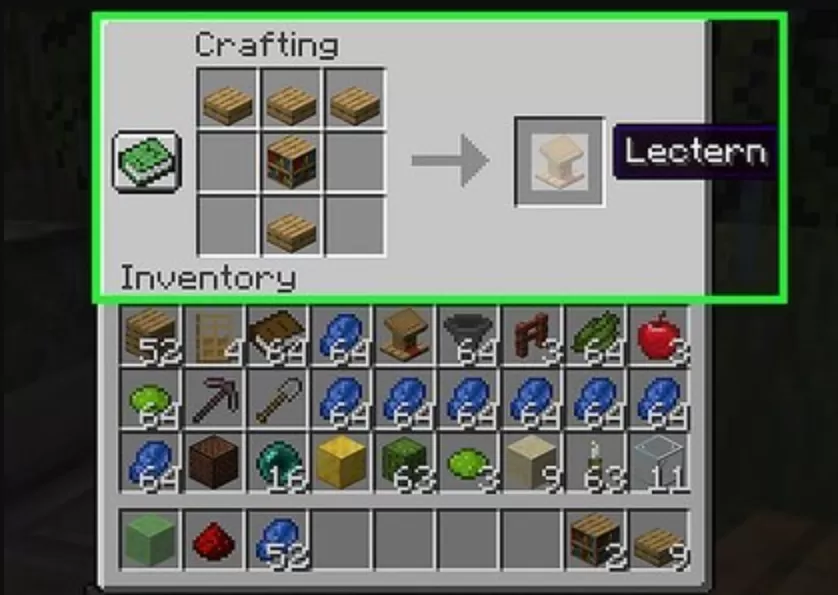
To craft the lectern you'll need, use 4 wooden slabs of any type on the top and sides, plus 1 bookshelf in the center.
If Villager Trade Rebalance Is Enabled
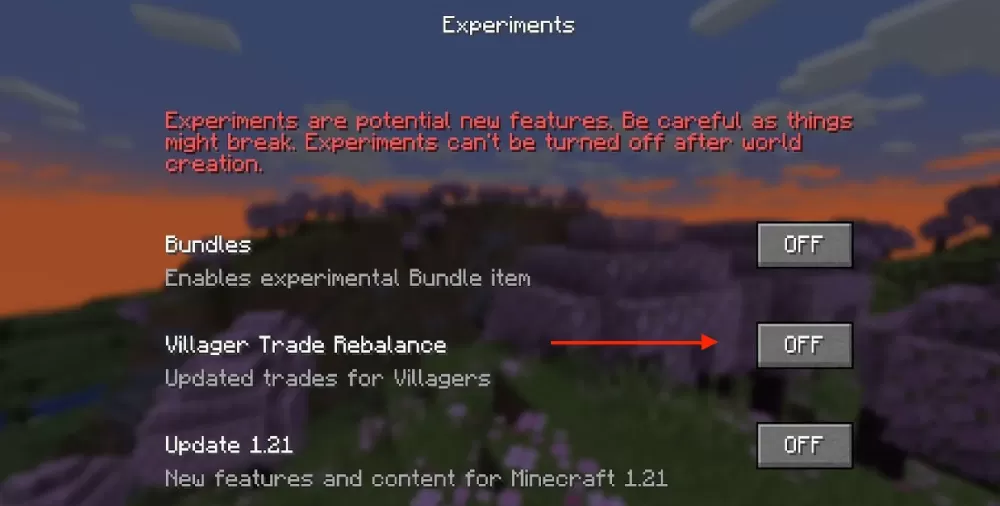
Some worlds have the Villager Trade Rebalance experimental toggle turned on, which changes the rules significantly. Under this system, only librarians found or created in swamp biomes can offer Mending, and instead of a random reroll, it becomes a guaranteed trade once that villager reaches Master level. To use this method, either breed two villagers inside a swamp or cure a zombie villager found in one, give them a lectern, and then trade with them repeatedly to level them up. It takes longer overall since you have to grind their level rather than just rerolling a lectern, but it removes luck from the equation entirely. Most players leave this experiment off and stick with the classic reroll method since it tends to be faster in practice. You can check whether it's enabled in the Experiments section when creating your world; if you never touched that menu, you're on the standard system.
Fishing
Mending books can occasionally show up as a treasure catch while fishing, though the base chance is low, around 0.8% per catch. Luck of the Sea on your fishing rod improves this rate, and you need to be fishing in open water for treasure catches to happen at all. An AFK fishing setup can grind this passively in the background. It's a nice bonus source, but far too slow to rely on as your main strategy if villagers are available to you.
Loot Chests
Mending enchanted books also generate as loot across a wide range of structures on Bedrock, including strongholds, ancient cities, trial chambers, bastion remnants, end cities, mineshafts, desert and jungle temples, and dungeons. Ancient cities and strongholds tend to have the best odds among these. This method is fully luck-based, so treat it as a nice surprise while exploring rather than something to plan around.
Raid Drops (Bedrock Exclusive)
This source is unique to Bedrock Edition. Winning a pillager raid gives you a chance at enchanted book drops, including Mending, from the mobs you defeat. It's inconsistent, but if you're already defending your village from raids, it's a possible bonus source that Java players simply don't have access to.
Making Mending Cheaper
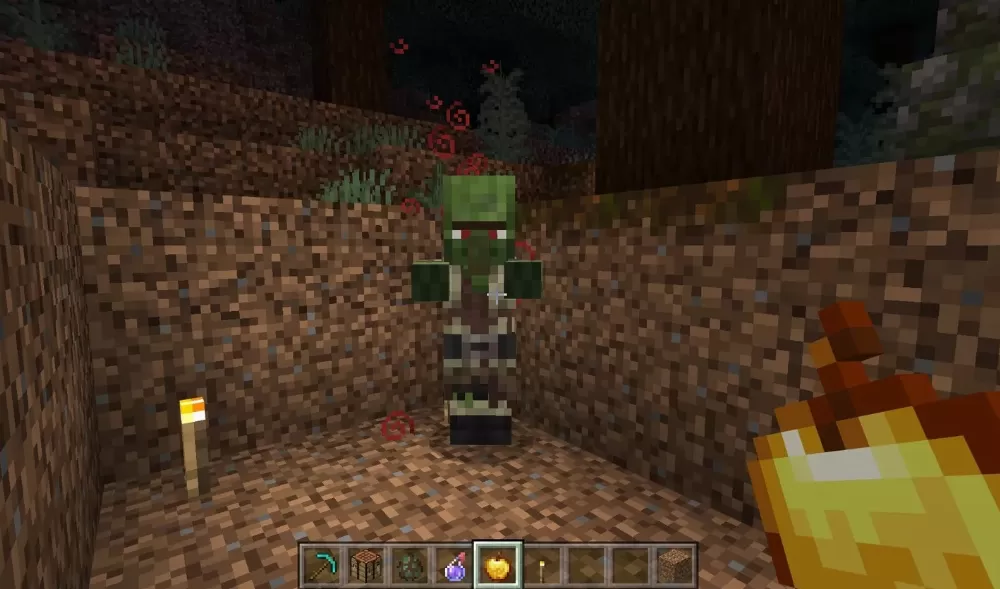
Once you've got a librarian selling Mending, the price can sit at 20 or more emeralds per book, which adds up if you want multiple copies. You can cut that down dramatically by turning your librarian into a zombie villager and curing them. On Hard difficulty, letting a zombie attack a villager guarantees the conversion. From there, cure them with a Splash Potion of Weakness followed by a Golden Apple. A cured villager gets significant trade discounts, often bringing Mending down to a single emerald. Do this before locking in too many trades, and once your librarian is cured, protect it carefully since losing it means starting the whole process over.
Mending and Infinity Don't Mix
On a bow specifically, Mending and Infinity are mutually exclusive, you can only enchant one or the other. Most players go with Mending, since a bow that never breaks combined with a steady arrow supply usually works out better than saving arrows on a bow that still degrades. For every other item in the game, Mending stacks fine with anything else, so feel free to put it on pickaxes, swords, armor, elytra, shields, tridents, and fishing rods without any conflicts.
Where to Use Your First Books
Since Mending books take real effort to collect, prioritize the gear you actually use all the time. Elytra is the top pick, since phantom membranes are the only other repair method and Mending is far more convenient. Your main pickaxe wears down constantly from mining, so it benefits enormously. A full set of Mending armor means you never have to re-enchant or re-craft pieces, and your primary weapon, whether sword or trident, should never risk breaking mid-fight. Avoid wasting books on temporary iron gear or anything you plan to replace soon.
Common Mistakes
The single biggest mistake is trading with a librarian before Mending shows up in their offers, which locks you out permanently and forces a fresh start. Letting your Mending librarian die is another costly error, since it's one of the most valuable things in your world and deserves real protection with walls, lighting, and distance from hostile mobs. Some players also spend hours fishing before trying the villager method, when trading is both faster and gives unlimited books. Finally, remember that Mending only repairs items you're actively holding or wearing, gear sitting untouched in your inventory won't benefit from any XP you collect.
