Building a Working Geyser in Minecraft Bedroc: Complete Guide
Geysers are one of the more entertaining additions from Chaos Cubed, launching anything standing on them straight up into the air. The build itself is deceptively simple: three blocks stacked correctly, and you've got a working geyser in about half a minute.


What You Need
- Potent Sulfur — the block that actually triggers the effect. Found naturally in sulfur caves and sulfur springs, or crafted from 9 sulfur blocks.
- Magma Block or Lava — the heat source underneath. Magma gives you periodic bursts, lava gives you a constant stream.
- Water — 1 to 4 source blocks placed directly above the potent sulfur.
Regular sulfur blocks won't do anything here. It has to specifically be potent sulfur, which trips up a lot of first-time builders.
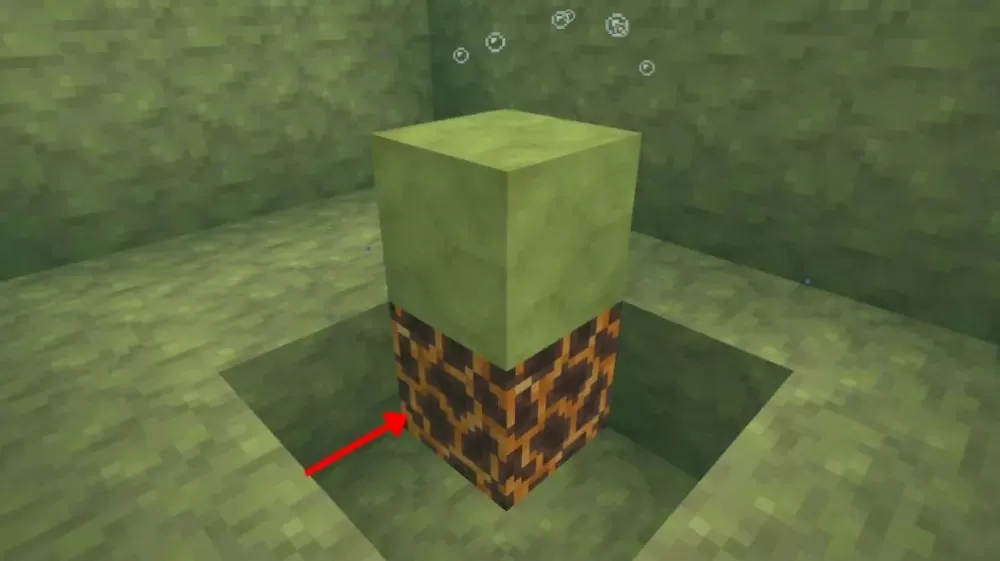
Stack Order
From bottom to top: heat source first, potent sulfur directly on top of it, then your water source blocks on top of that. If noxious gas particles start rising off the surface of the water, the geyser is active.
Choosing Magma or Lava
A magma block gives you a periodic geyser that cycles between dormant and active states, with a full cycle running anywhere from 15 to 60 seconds and each eruption lasting 1 to 5 seconds. The unpredictable timing makes it fun for traps or catching friends off guard.
Lava instead gives you a continuous geyser that never stops erupting as long as the lava stays in place. This is the better pick for elevators or anything where you need reliable upward force whenever you step on it. If you go this route, seal the sides with solid blocks so the water above can't reach the lava and turn it into obsidian or stone, a mistake almost everyone makes on their first attempt.
Building One Step by Step
Periodic (Magma-Based)
- Dig a hole 3 blocks deep
- Place a magma block at the bottom
- Place potent sulfur directly on top of it
- Pour a water bucket into the remaining top space
- Wait for the first eruption cycle to kick in
Continuous (Lava-Based)
- Dig a hole 3 blocks deep
- Pour lava at the bottom
- Seal it in on all four sides with solid blocks so water can't touch it
- Place potent sulfur on top of the lava
- Pour water into the top block
- The geyser starts erupting immediately and keeps going
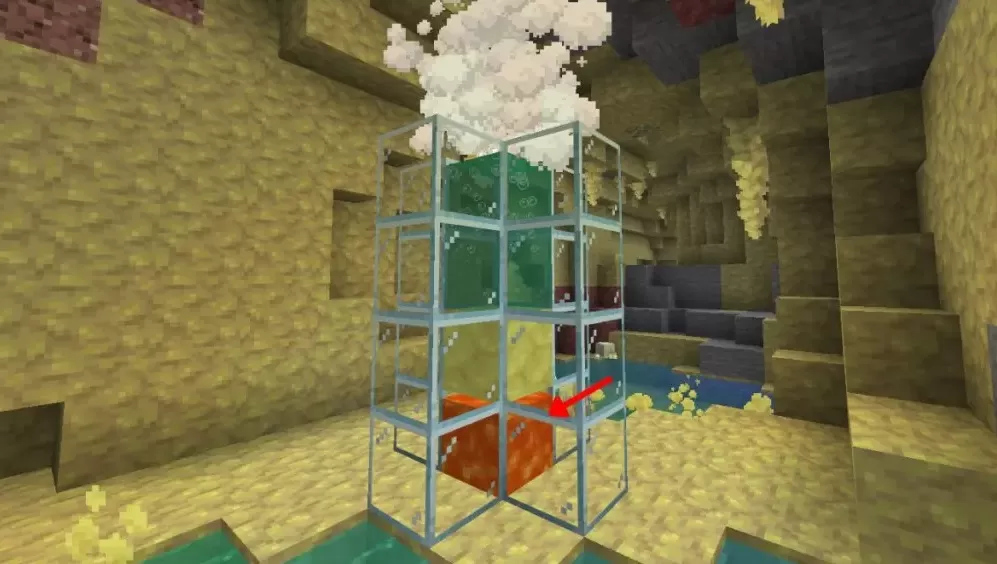
Water Depth Determines Power
The number of water source blocks stacked above the potent sulfur directly controls how strong the eruption is, up to a maximum of 4. Go beyond that and the geyser simply stops functioning.
- 1 block: a small, gentle push
- 2 blocks: a moderate eruption
- 3 blocks: strong enough to launch you well above the surface
- 4 blocks: maximum power, launching roughly 20 blocks into the air
Deeper water also extends the dormant period between eruptions for magma-based geysers, so more height means longer waits between bursts.
Sourcing Potent Sulfur
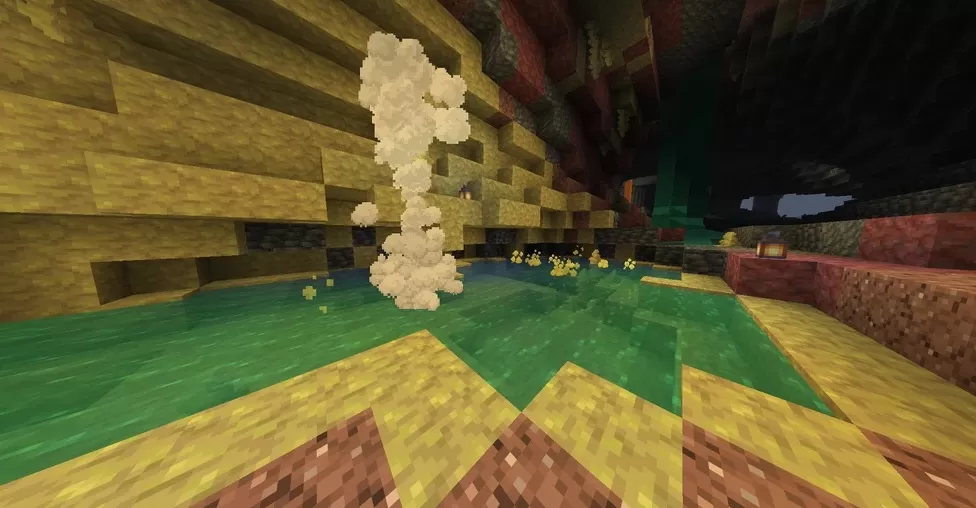
Sulfur springs are surface-level pools ringed by yellow sulfur and red cinnabar, with noxious gas visibly rising off the water. Dig underneath one and you'll find a sulfur cave. Natural geysers only form at these surface springs, not in the underground pools, since the cave pools don't have magma sitting beneath them. If you'd rather craft your own, 9 sulfur blocks arranged in a 3x3 grid gives you 1 potent sulfur block, and sulfur blocks themselves come from mining in sulfur caves or crafting 4 sulfur spikes together.
Things You Can Build With It
Vertical elevator: line a glass shaft with a lava-based geyser at the bottom using 4 water blocks. Step in for an instant launch, and place a water landing pad at the top to cushion the fall. Faster and flashier than a traditional soul sand elevator.
Elytra launcher: same setup as the elevator, but leave the top open. The upward force pops your elytra open mid-launch, skipping the need for a tall tower to jump from. Lava works better than magma here since you don't want to be stuck waiting on a dormant cycle.
Mob trap: hide a magma-based geyser under a walkway. Mobs that trigger it get launched and take fall damage coming back down. Pair it with a collection setup underneath for a strange but functional farm.
Redstone-controlled geyser: wire a dispenser loaded with a lava bucket to a lever or button. Press it to flow lava under the potent sulfur and activate the geyser, press again to retract the lava and shut it off.
Decorative hot spring: ring a shallow pool with sulfur and cinnabar blocks, drop potent sulfur on a magma block at the bottom, and let the periodic steam and gas particles do the rest for atmosphere.
Things Worth Knowing
The noxious gas rising from potent sulfur underwater applies Nausea to any player or mob that walks through it, lasting about 3 seconds. Keep that in mind if you're building a geyser near a path people use often.
The geyser itself won't hurt you, but the landing will. A 4-block geyser can send you roughly 20 blocks up, which is more than enough to kill an unarmored player on the way back down. Always plan for the fall with a water pad, slime blocks, or a Slow Falling potion.
Every water block in the stack needs to be a full source block, flowing water doesn't count. If your build isn't working, that's usually why. Kelp can convert flowing water into source blocks if you're stuck. Potent sulfur also can't be pushed by pistons since it behaves as a block entity, so redstone builds need to move the heat source instead. Finally, leave at least 20 blocks of open space above the geyser, since a low ceiling will block the eruption from working properly.
